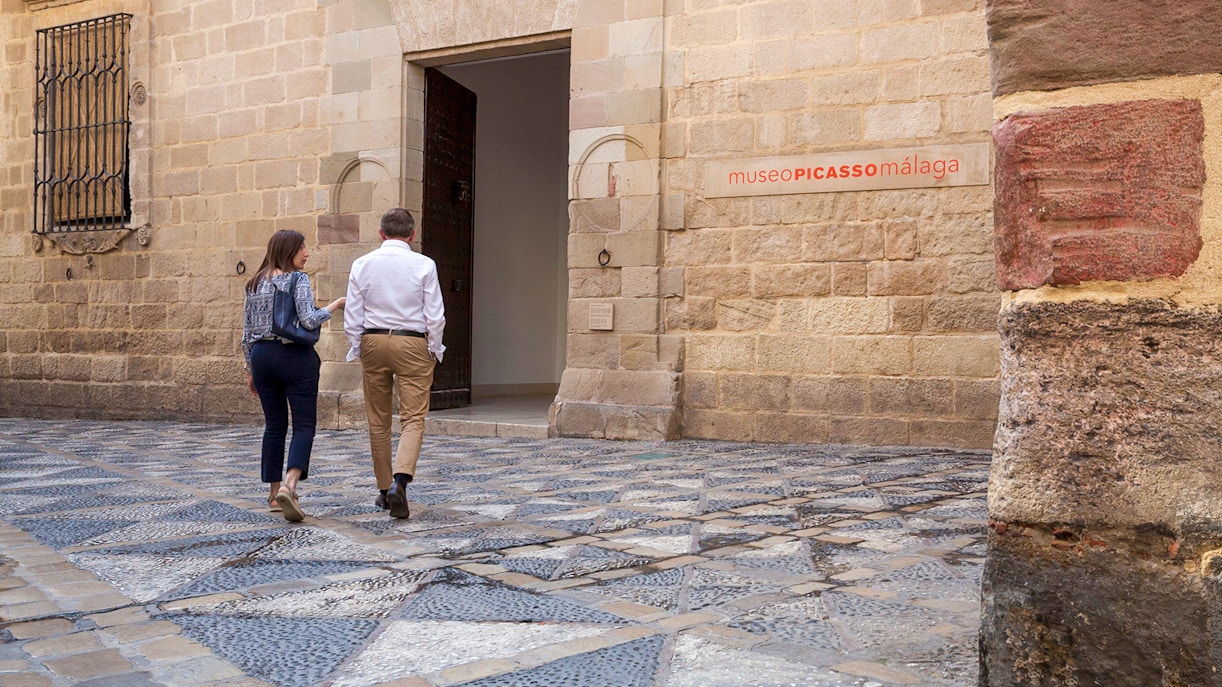
- Asymmetrical stone façade: The palace's unique, asymmetrical façade is crafted entirely from stone with a mix of solid blocks and intricate details.
- Renaissance entrance: The main entrance is a work of art! Featuring elaborately decorated doors and windows, its design immediately draws your attention and sets the tone for the interior.
- Defensive tower: A massive, rectangular medieval defense tower dominates the palace. Originally used as a lookout point for identifying ships arriving at the port, it has a dual lowered arch visible from Calle San Agustín.
Buenavista Palace Malaga | Interesting Facts, History & More
Rising from the remains of a Nasrid palace, this 16th-century palace was once a home for nobility and has now transformed into a vibrant hub of art and history, proudly housing the well-known Picasso Museum Malaga since 2003.
History of Buenavista Palace Malaga
- 16th century: Buenavista Palace was built in the first half of the 16th century for Diego de Cazalla, a notable figure who participated in the conquest of Málaga during the Granada War. The palace was constructed on the ruins of a former Nasrid palace.
- Early 19th century: After Diego de Cazalla's death, the palace passed through various noble families, including the Counts of Mollina and later the Counts of Buenavista in the 19th century. It served as a family residence for centuries but saw reduced occupancy from the 19th century onward.
- 1938: During the Spanish Civil War in 1938, it was utilized as a hospital by the Red Cross.
- 1961: Became the new home of the Museo de Bellas Artes (Museum of Fine Arts).
- 1996: Purchased by the Andalusian Autonomous Government for 650 million pesetas (6.5 million dollars).
- 1997: Museo de Bellas Artes closed to prepare for the establishment of the Picasso Museum Malaga.
- 2003: The museum officially opened on October 27, 2003, following extensive renovations led by architect Richard Gluckman.
- 2009: The Fundación Museo Picasso Málaga and the Fundación Paul, Christine y Bernard Ruiz-Picasso merged, creating the "Museo Picasso Málaga Foundation. The Paul, Christine, and Bernard Ruiz Picasso Legacy."
Exterior of Buenavista Palace
Interior of Buenavista Palace
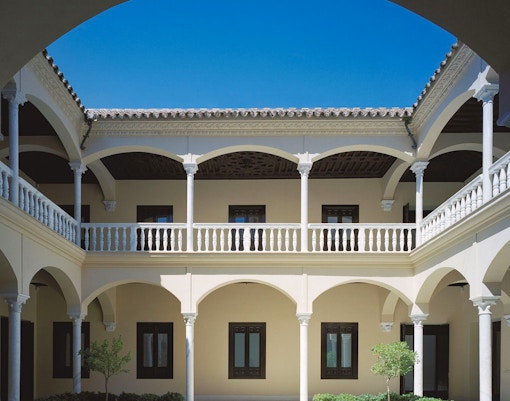
First Patio
Step inside and prepare to be wowed by the First Patio! This stunning example of Renaissance elegance greets you with open arms. Picture this: a double colonnade—one on each floor—creating perfect symmetry and a timeless vibe. It's grand, it's serene, and it's the perfect welcome to this architectural masterpiece!
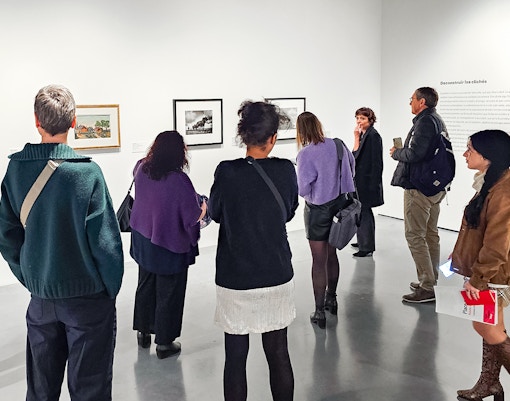
Second Patio
Venture further and discover the Second Patio, a space bursting with Mudéjar influences. Get ready to feast your eyes on octagonal pillars and two breathtaking Roman-era mosaics:
- One mosaic, from Cártama, depicts the birth of Venus.
- The other, from Benalmádena, features an intricate geometric pattern.
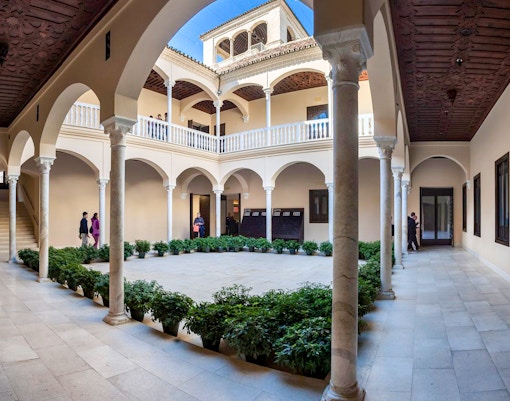
Courtyard and Galleries
The heart of the palace is the central courtyard, featuring a double gallery that maximizes natural light and perfectly embodies classic Andalusian architectural principles. The result? An open, airy, and vibrant space where light and shadow come together to create pure magic. It's the perfect balance of beauty and function!
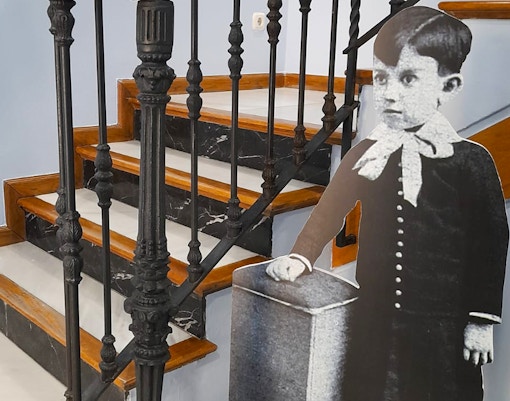
The stairway
To the right of the courtyard is a grand stairway that leads to the upper floor. However,Although some tweaks have been made for the Picasso Museum. The stairway retains its historic charm, standing as a graceful link between the palace’s past and present. Every step you take feels like a journey back in time!

Mudéjar Ceilings
Inside the palace, look up at the Mudéjar ceilings—masterpieces of intricate craftsmanship. These beautifully carved ceilings showcase geometric patterns and vivid colors, highlighting the artistry of the Mudéjar style. Each ceiling tells a story of its own!
Interesting facts about Buenavista Palace Malaga
- Before the current palace was built, the site housed a Nasrid palace. Some features, like the Moorish tower, are believed to date back to this earlier structure.
- During renovations, the ruins of a Phoenician city wall, a Roman garum factory, and Nasrid structures were uncovered. These are, now viewable through glass panels in the museum.
- Two ancient Roman mosaics, including the Birth of Venus, are preserved and displayed in the Mudéjar-style patio.
- Over the centuries, the palace served various roles, including a family home, a furniture factory, an educational center, and even a Red Cross hospital during the Spanish Civil War.
- Since 2003, the palace has housed the Picasso Museum, fulfilling the wish of Picasso’s family to display his works in an Andalusian-style building.
- Unlike many Renaissance buildings, the palace’s façade is intentionally asymmetrical, giving it a distinctive charm.
Frequently asked questions about Buenavista Palace
Buenavista Palace is significant not only for its architecture but also for its rich history. It embodies the transformation of Malaga from medieval times to the Renaissance and beyond. It also preserves elements of its Nasrid, Moorish past.
You’ll need around 2–3 hours to fully explore the palace, the Picasso Museum, and its stunning patios and exhibits.
The Picasso Museum, including Buenavista Palace, is designed to accommodate visitors with reduced mobility, with ramps and elevators available.
Photography policies may vary, but typically, photos are not allowed in the Picasso Museum galleries. However, you can take pictures in the patios and exterior areas.
The palace was selected based on the wish of Picasso’s family to display his works in a historically and culturally significant Andalusian building.
Yes! Over the centuries, the palace served various purposes, including as an educational center, a furniture factory, and even a Red Cross hospital during the Spanish Civil War.
The restoration and transformation of the Buenavista Palace into the Picasso Museum took several years, with extensive work beginning in the late 1990s and the museum opening in 2003.
Yes! The museum provides rich historical context about the Buenavista Palace through audio guides, exhibitions, and informative plaques throughout the palace and museum.
The palace is centrally located in Malaga, and you can easily walk to it from the city center. It’s just a short stroll from the Malaga Cathedral and other key landmarks.

