A day at Alcazaba and Roman Theater | Your complete guide
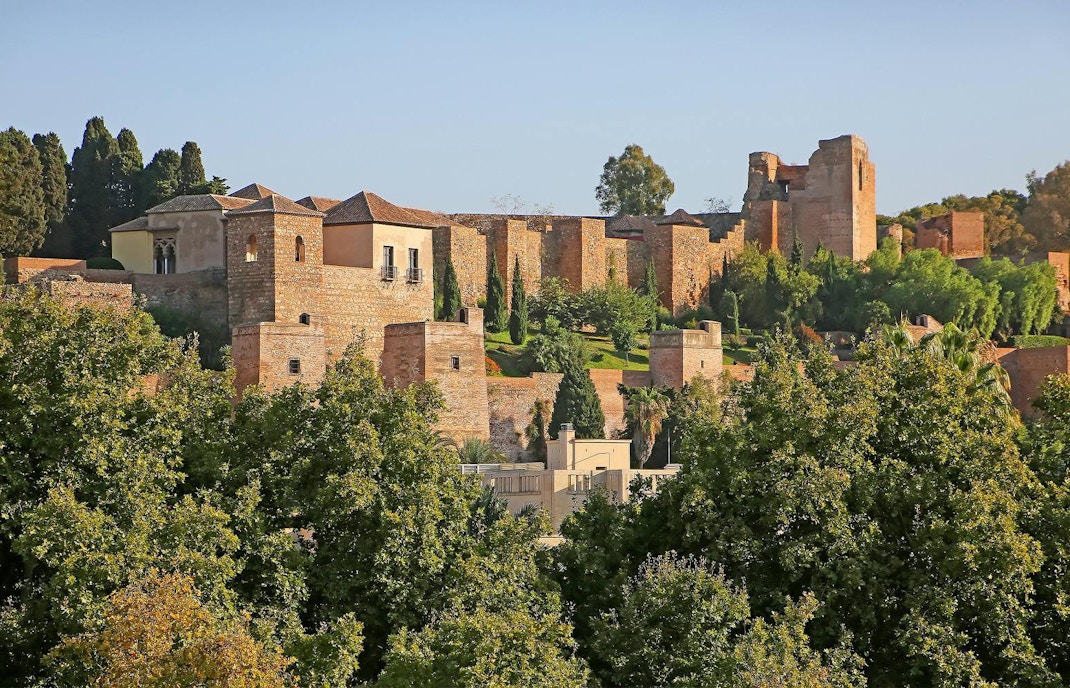
The Alcazaba and Roman Theater form Málaga’s most rewarding historic visit, pairing a 1st-century Roman monument with an 11th-century Moorish fortress on the same hillside. The experience is compact, but it is not effortless: the route climbs, the best views come late, and the lack of deep on-site interpretation means sequence matters more than people expect. Start at the Roman Theater, then work uphill through the Alcazaba. This guide covers timing, tickets, entrances, and the route that makes the visit feel easy.
Quick overview: Alcazaba & Roman Theater at a glance
If you want the short version before you plan the rest of your day, start here.
- When to visit: Tuesday–Thursday from 10am–12 noon is noticeably calmer than Sunday after 2pm, because the free-entry window pulls in local crowds just as the stone paths are getting hottest.
- Getting in: You have a standard Alcazaba entry, while the Roman Theater is free. You can usually buy on arrival, but Sunday free-entry afternoons are the one window when queues genuinely build.
- How long to allow: 1.5–2 hours for most visitors. Add another hour if you want the interpretation center, long photo stops, or the uphill link toward Gibralfaro.
- What most people miss: The Roman Theater’s interpretation center and the quieter palace courtyards near the top, because many visitors rush straight uphill for the first big viewpoint.
- Is a guide worth it? Yes, if you want the Roman-to-Moorish story to connect properly; if you mainly want views and a flexible pace, a phone audio guide is enough.
Jump to what you need
🕒 Where and when to go
🗓️ How much time do you need?
🗺️ Getting around
🏰 What to see
♿ Facilities and accessibility
Where and when to go
How do you get to Alcazaba & Roman Theater?
The complex sits between Málaga’s old town and Gibralfaro hill, about a 10-minute walk from Calle Larios and Plaza de la Marina.
Address: Calle Alcazabilla, 2, 29015 Málaga, Spain | Find on Google Maps
- Walk: From Calle Larios → 10-min walk → Follow Calle Císter or Paseo del Parque toward the Roman Theater.
- Bus: Plaza de la Aduana / Paseo del Parque area → 2–5 min walk → Best if you want to avoid extra uphill walking before entry.
- Taxi / rideshare: Drop-off at Plaza de la Aduana or Calle Guillén Sotelo → 2–4 min walk → Use Calle Guillén Sotelo if you need the elevator access point.
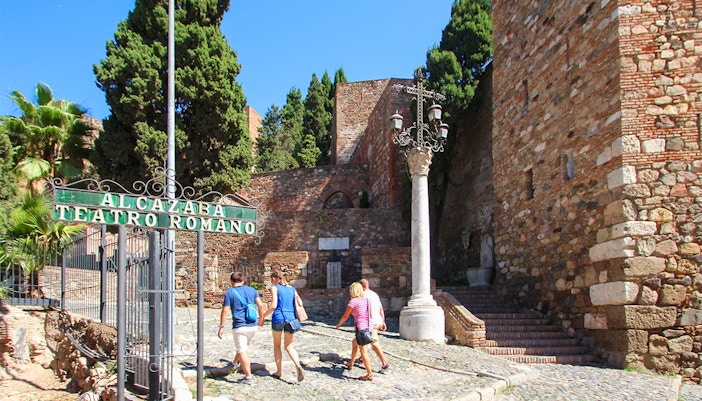
Which entrance should you use?
The Roman Theater and Alcazaba feel like one visit, but they do not work like one entrance. The most common mistake is skipping the free Roman Theater first and losing the historical sequence before the climb even starts.
- Roman Theater entrance: Located on Calle Alcazabilla. Best for starting with the free ruins and interpretation center. Expect little to no wait outside Sunday afternoons.
- Alcazaba main entrance: Located beside the Roman Theater on Calle Alcazabilla. Best for paid-entry visitors and combo-ticket holders. Expect 5–15 min wait, rising sharply before Sunday free entry.
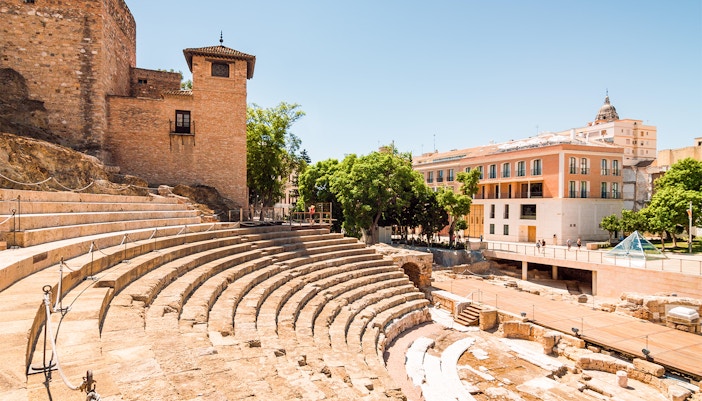
When is Alcazaba & Roman Theater open?
- Alcazaba (April 1–October 31): Monday–Sunday, 9am–8pm
- Alcazaba (November 1–March 31): Monday–Sunday, 9am–6pm
- Roman Theater: Tuesday–Saturday, 10am–6pm
- Roman Theater: Sunday, 10am–4pm
- Roman Theater: Monday closed
- Last entry: 45 min before Alcazaba closing
When is it busiest? Sunday after 2pm, summer afternoons, and Easter-week midday slots are the toughest window for lines, heat, and crowded viewpoints.
When should you actually go? A weekday start around 10am works best here because the Roman Theater is open, the Alcazaba courtyards are still cool, and the upper ramparts are far quieter than later in the day.
How much time do you need?
| Visit type | Route | Duration | Walking distance | What you get |
|---|---|---|---|---|
Highlights only | Roman Theater → lower gates → one main viewpoint → exit | 1–1.5 hrs | ~1 km | Covers the theater, story setup, and main views. Palace areas and upper context are rushed or skipped. |
Balanced visit | Roman Theater → interpretation center → main Alcazaba climb → palace courtyards → upper viewpoints | 1.5–2 hrs | ~1.5 km | The right fit for most visitors. Covers everything without rushing the most atmospheric sections. |
Full exploration | Roman Theater → interpretation center → full Alcazaba route → palace courtyards → upper ramparts → uphill link toward Gibralfaro | 3+ hrs | ~2.5 km | Adds the Gibralfaro continuation. Only worth it if you want the full defensive complex, not just the Alcazaba. |
How do you get around Alcazaba & Roman Theater?
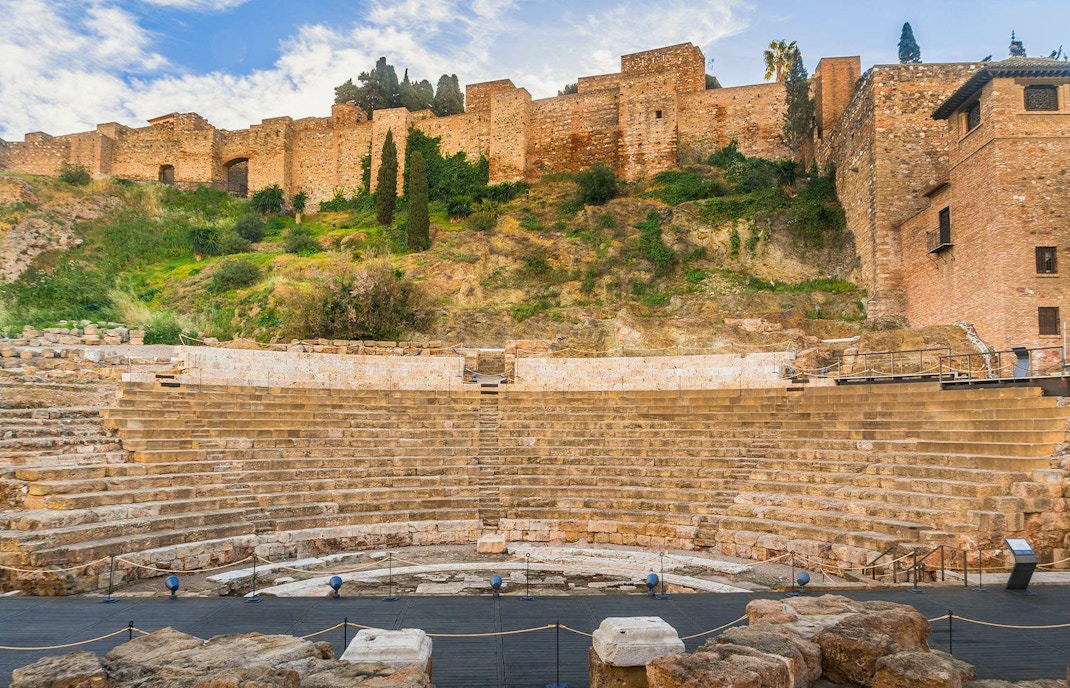
Layout and route
This is best explored on foot, and while it is not huge, the climb and layered layout mean a clear route matters more than the raw distance suggests. The Roman Theater sits at the base, and the Alcazaba rises directly above it, so the visit naturally works from lower history to upper views.
- Roman Theater: Ruins, seating curve, and interpretation center → budget 20–30 min.
- Lower gates and defensive passages: Angled entries, reused Roman columns, and the steepest early climb → budget 15–20 min.
- Palace courtyards: Orange trees, fountains, and the calmest part of the fortress → budget 20–25 min.
- Upper ramparts and viewpoints: Harbor, cathedral, and city panoramas → budget 20–30 min.
Suggested route: Start at the Roman Theater museum space, enter the Alcazaba only after that, then work uphill through the gates before slowing down in the palace courtyards. Most visitors rush straight to the highest viewpoint and miss the quieter palace areas that actually give the site its character.

Maps and navigation tools
- Map: A downloaded site plan or saved screenshot is the safest option → it helps with gates, courtyards, and the climb sequence → get it before arrival rather than relying on signal on-site.
- Signage: Wayfinding is good enough to keep moving, but not strong enough to explain what you are seeing without extra help.
- Audio guide / app: A phone-based audio guide adds real value here → the site has fewer interpretive labels than a typical museum, so context is otherwise easy to miss.
- Large outdoor POIs only: If you also plan to continue to Gibralfaro, a guided route makes navigation and pacing much easier than improvising the uphill link.
💡 Pro tip: Do the Roman Theater before you scan any fortress views — once you start climbing, most people never come back down to the interpretation center, and that is where the whole site starts to make sense.
What can you see from Alcazaba & Roman Theater?
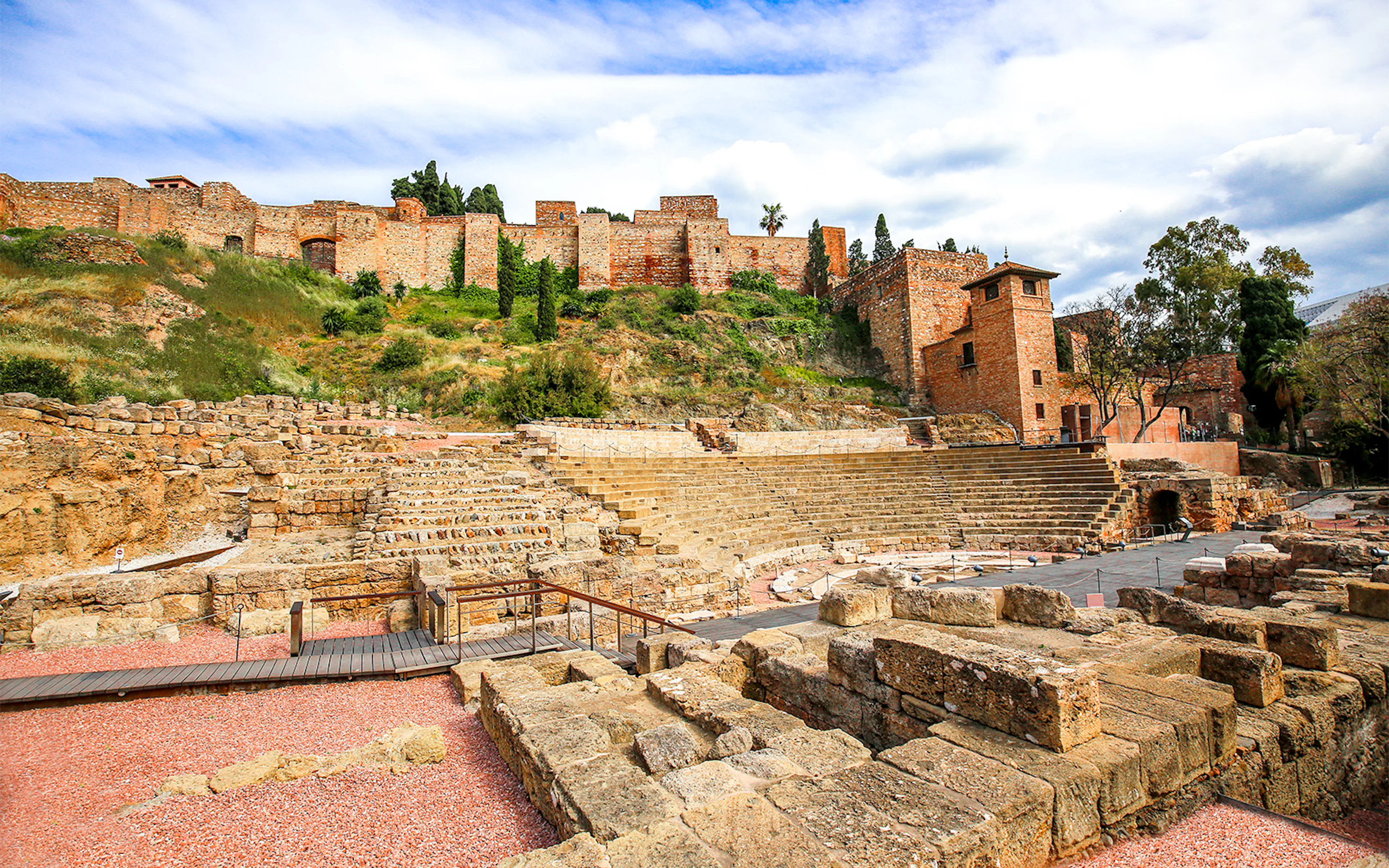
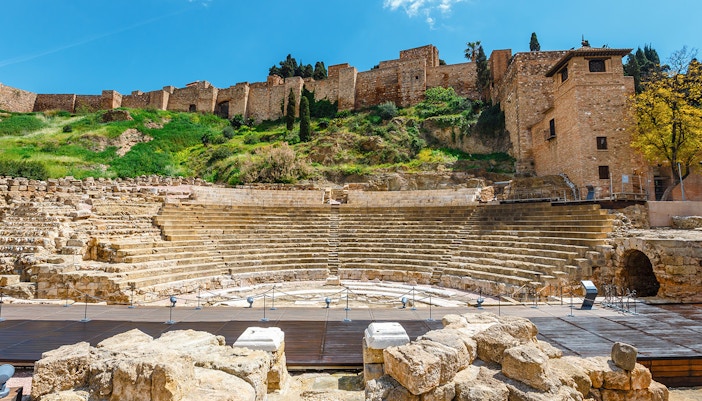
Roman Theater
Era: 1st century BC to 3rd century AD
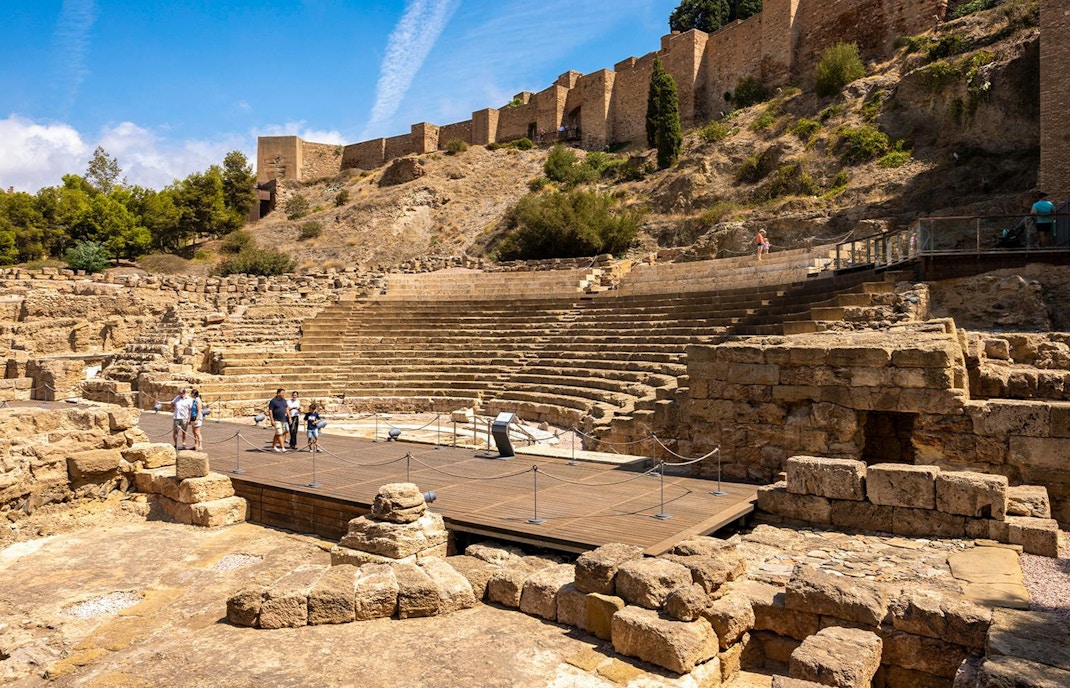
This is Málaga’s oldest surviving monument, and it gives the visit its starting point rather than just a photo stop. The restored seating curve and stage are impressive on their own, but the detail most people miss is how directly the theater connects to the Alcazaba above — some of its stone and columns were later reused in the Moorish fortress.
Where to find it: At street level on Calle Alcazabilla, directly below the Alcazaba entrance.
Puerta de las Columnas
Era: 11th century, with reused Roman material
This is one of the clearest examples of the Alcazaba’s layered history, where Roman marble columns were built into a Moorish defensive gate. It matters because it shows the fortress as more than a scenic climb — it is a monument built quite literally out of earlier Málaga. Most visitors pass through quickly without noticing the Roman pieces set into the arch.
Where to find it: On the uphill entrance sequence after the lower gates, before the palace section opens out.
Patio de los Naranjos
Era: Nasrid palace period
This courtyard is the point where the Alcazaba stops feeling purely defensive and starts feeling residential. The reflecting pools, orange trees, and calmer proportions make it the most atmospheric space in the complex, especially after the climb through the gates. Most visitors photograph it and move on, but the surviving pool layout is the part worth slowing down for.
Where to find it: In the upper palace area near the summit of the Alcazaba route.
Arco de Cristo
Era: Moorish gate later tied to the Christian conquest
This horseshoe arch is easy to underestimate because it is not the highest viewpoint or the biggest courtyard. What makes it important is the historical turning point attached to it: this was the gate associated with the Christian capture of Málaga in 1487. Most people remember the arch itself but miss the story behind why this specific gate is singled out.
Where to find it: Along the internal route between the fortress passages and the palace zone.
Upper ramparts and harbor viewpoint
Era: Medieval defensive walls
These ramparts are where the whole site clicks. You see the Roman Theater below, the cathedral and old town ahead, and the port and sea beyond, which explains exactly why the fortress was built here. Most visitors head for the first open viewpoint and leave, but the better perspective comes once you keep walking along the wall line toward the higher sections.
Where to find it: At the upper end of the Alcazaba route, near the highest accessible wall walks and towers.
Facilities and accessibility
- 🏛️ Interpretation center: The Roman Theater includes a small interpretation space with exhibits and a short film, and it is the most useful place to get context before the climb.
- 🎟️ Ticket office and machines: You can buy Alcazaba tickets at the main entrance on Calle Alcazabilla, and the vending machines are useful if a small line forms at the booth.
- 🛗 Elevator access: There is an elevator entrance on Calle Guillén Sotelo that helps visitors avoid part of the lower climb into the Alcazaba.
- 🌳 Rest areas: The palace courtyards and gardened sections are the easiest places to pause, cool down, and reset between uphill sections.
- 📸 Viewpoint stops: The ramparts and upper terraces double as the best photo points and the best natural breathing breaks on the route.
- ♿ Mobility: Access is partial rather than full; the elevator helps you bypass part of the climb, but cobblestones, slopes, stairs, and upper ramparts still make the full route difficult for many visitors.
- 👁️ Visual impairments: Guide dogs are the most practical support here, because labels are limited and much of the experience depends on route, sightlines, and spatial sequencing.
- 🧠 Cognitive and sensory needs: Weekday mornings are the calmest window, while Sunday free-entry afternoons and summer mid-afternoons feel much busier, louder, and more overwhelming.
- 👨👩👧 Families and strollers: Lower sections are easier than the full uphill route, but strollers become awkward on cobblestones and steps, so a baby carrier is the simpler option for the upper areas.
This works best for children who like castles, towers, and big views more than hands-on exhibits.
- 🕐 Time: 60–90 min is realistic with young children if you prioritize the Roman Theater, a few gates, and one major viewpoint instead of doing every upper section.
- 🏠 Facilities: The interpretation center gives children the clearest visual context, but the rest of the visit is mostly open-air walking rather than interactive museum time.
- 💡 Engagement: Turn the climb into a castle mission by asking kids to spot reused Roman columns, the biggest gate, and the first full harbor view.
- 🎒 Logistics: Bring water, sun protection, and shoes with grip, because the stone paths get hot and slippery strollers become more effort than most families expect.
- 📍 After your visit: Plaza de la Merced is an easy next stop for a snack and open space, and Picasso’s Birthplace Museum is a short walk away if they still have energy.
Rules and restrictions
What you need to know before you go
- Entry requirement: Alcazaba entry is paid and untimed, while the Roman Theater is free, so you can usually buy at the gate without locking yourself into a slot.
- Bag policy: Bring only what you want to carry uphill, because this visit is far easier with a light day bag than with luggage or a bulky stroller.
- Re-entry policy: Plan the site as one continuous visit, because leaving mid-route means giving up your pace and repeating the uphill access later.

Not allowed
- 🚫 Food and drink: Save eating for before or after the visit, not while moving through the ruins and palace courtyards.
- 🚬 Smoking and vaping: Avoid smoking inside the monument areas, where narrow passages and shared viewpoints make it disruptive quickly.
- 🐾 Pets: Treat this as a service-animal-only kind of visit, because the climb, heat, and tight passages are not a good fit for pets.
- 🖐️ Climbing and touching: Stay on marked paths and off the walls and theater seating, because the oldest surfaces here are protected ruins, not open-access platforms.
Photography
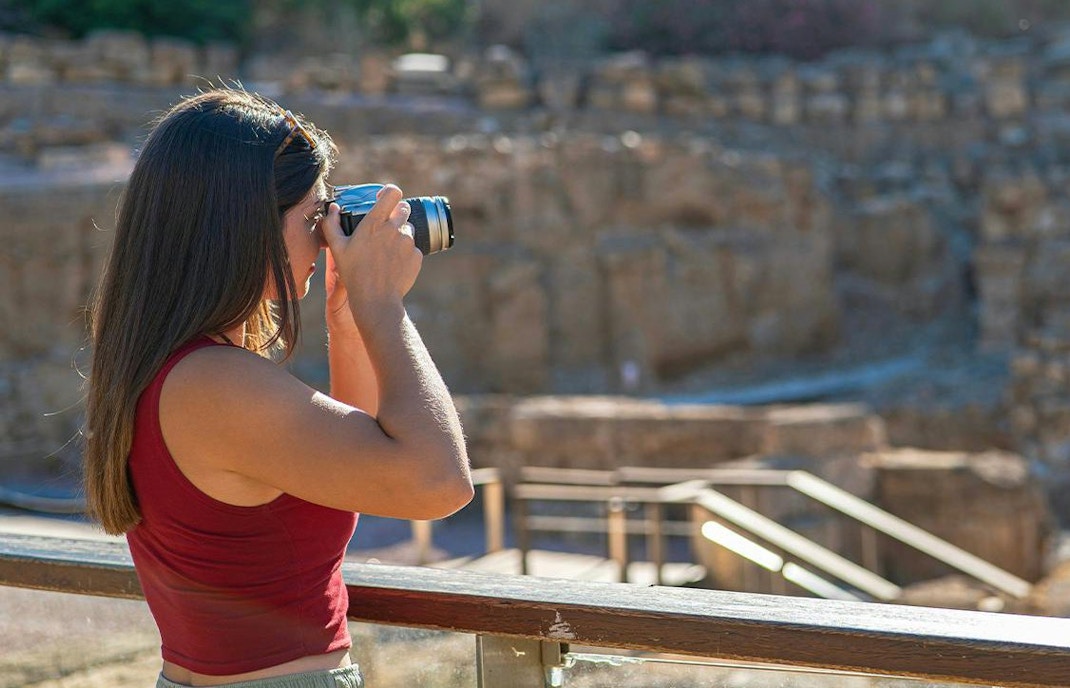
Personal photography is one of the best parts of this visit, and the clearest shots usually come from the Roman Theater platform, the Patio de los Naranjos, and the upper ramparts. Flash adds nothing in the outdoor sections and is best avoided in enclosed palace spaces, while tripods and bulky selfie sticks are awkward on narrow routes that bottleneck easily. If a section is roped off or under restoration, photograph it from the path rather than stepping around barriers.
Good to know
- Free Sunday entry: Sunday after 2pm is free, but it is also the busiest and least peaceful window of the week.
- Gibralfaro add-on: If you plan to continue to Gibralfaro Castle, pace your water and energy at the Alcazaba because the steepest stretch of the day may still be ahead.
Practical tips
- Booking and arrival: You usually do not need to book far ahead for a standard visit, but arriving 15–20 min before you want to start gives you time to do the Roman Theater first without feeling rushed uphill.
- Pacing: Save your slowest, most attentive time for the palace courtyards near the top, because that is the part most people blur through after treating the climb like the main event.
- Crowd management: A Tuesday, Wednesday, or Thursday start around 10am is the sweet spot here, because the Roman Theater is open, group tours have not fully stacked up yet, and the upper walls are still manageable for photos.
- What to bring or leave behind: A small bag, water, and shoes with grip matter more than anything else here, because cobblestones, slopes, and heat punish overpacking faster than at a flat city museum.
- Food and drink: Eat before you enter or plan lunch after, because this is not a place with a natural mid-visit café break and leaving halfway disrupts the route more than most people expect.
- Guided route choice: If you want context rather than just views, the 3-Hour Guided Tour of Málaga with Roman Theater, Alcazaba & Cathedral Tickets is the cleanest way to understand how Málaga’s Roman, Moorish, and Christian layers connect in one outing.
What else is worth visiting nearby?
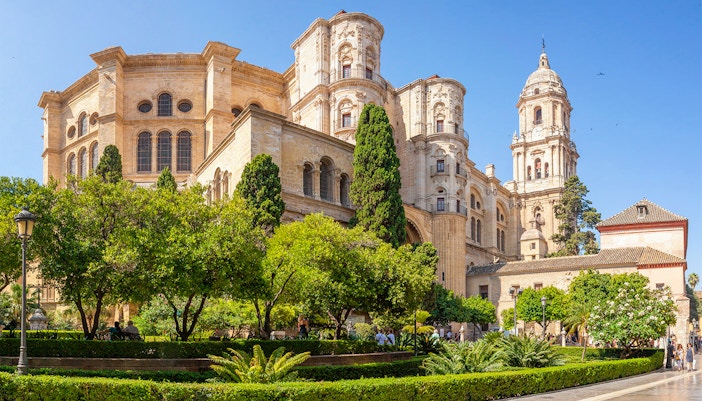
Commonly paired: Málaga Cathedral
- Distance: 500m — 7-min walk
- Why people combine them: The Cathedral is the natural architectural follow-up to the Alcazaba — Moorish fortress to a Christian landmark in one short walk.
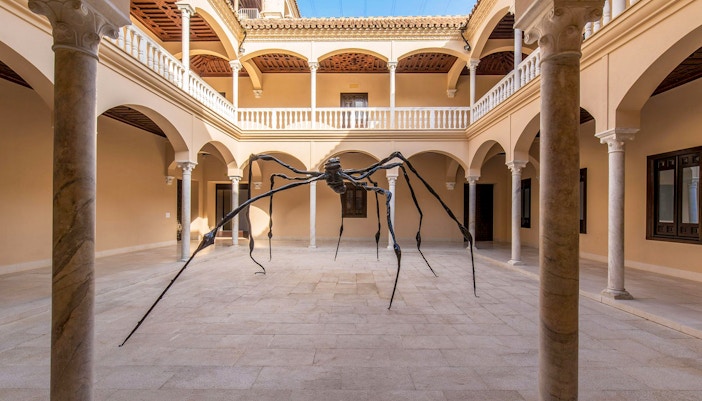
Commonly paired: Picasso Museum Malaga
- Distance: 400m — 5-min walk to Picasso Museum, 550m to Birthplace
- Why people combine them: The Alcazaba gives you Málaga's political and defensive history; the Picasso combo shifts the afternoon into the city's artistic identity.

Also nearby: Aqualand Torremolinos
- Distance: ~14km — around 20–25 min by train (Cercanías C1 from Málaga Centro Alameda to Torremolinos, then 15-min walk) or 17 min by taxi
- Worth knowing: The Costa del Sol's largest water park — the most practical family add-on if you want a full beach-and-slides day after your Alcazaba visit rather than another cultural stop.
Eat, shop and stay near Alcazaba & Roman Theater
- On-site: There is no meaningful sit-down food stop inside the monument complex, so it is smarter to eat before you enter or once you are back down on Calle Alcazabilla.
- El Pimpi (2-min walk, Calle Granada 62): Classic Málaga tapas and wine in the easiest post-visit location if you want somewhere atmospheric rather than quick.
- Uvedoble Taberna (5-min walk, Calle Císter 15): Creative tapas and a more relaxed sit-down option if you want lunch close to the Cathedral after the climb.
- Mercado Central de Atarazanas (15-min walk, Calle Atarazanas 10): Best if you want a casual market lunch instead of another formal historic-center stop.
- 💡 Pro tip: If you visit on Sunday after the free-entry window, eat later rather than immediately after leaving — nearby streets and terraces are busiest at exactly the same time the monument empties out.
- Málaga Museum shop: A useful stop for art books and culture-focused souvenirs without detouring far from the Alcazaba.
- Calle Marqués de Larios: Best for general shopping if you want to shift from monuments to the main retail spine of Málaga afterward.
Yes for a short Málaga stay if you want to walk to the Alcazaba, Picasso sights, Cathedral, and port without any transit. The historic centre is atmospheric and convenient, but it skews mid-to-high in price and gets noisy in the evening during summer.
Price point: Mid-range to higher-end — you are paying for walkability and central access.
Best for: Visitors on a short trip who want to see all major sites on foot.
Consider instead: Soho (10–15 min walk southwest) is calmer and cheaper, with equally easy walking access to the same historic sites. La Malagueta suits anyone who also wants beach access within easy reach.
Frequently asked questions about visiting Alcazaba & Roman Theater
Most visits take 1.5–2 hours. That is enough for the Roman Theater, the interpretation center, the main Alcazaba climb, the palace courtyards, and time at the upper viewpoints. If you stop often for photos or continue on to Gibralfaro, plan closer to 3 hours.
No, most visitors can buy their Alcazaba ticket on arrival without trouble. This is not a place like the Alhambra where weeks of planning are normal. The main exception is Sunday after 2pm, when free entry brings the longest queues and the least relaxed experience.
Usually not for a standard weekday visit, because ticket queues are often short. It becomes more useful if you are visiting on a Sunday free-entry afternoon, in summer at midday, or as part of a guided route where saving 10–15 min helps the whole schedule run more smoothly.
You do not need to manage a timed slot here because standard Alcazaba entry is general admission. Arriving 15–20 min before you want to start is still smart, because it lets you buy your ticket calmly, see the Roman Theater first, and begin the climb before the site feels busy.
Yes, a normal day bag is fine, but small is much better than large here. The practical issue is not strict museum-style bag screening so much as the route itself: cobblestones, slopes, and stairs make heavy backpacks, luggage, or bulky baby gear far more annoying than on a flat indoor attraction.
Yes, personal photography is one of the best parts of the visit. The strongest shots come from the Roman Theater viewpoint, the palace courtyards, and the upper walls. Large tripods and other bulky gear are awkward on narrow passages, so keep your setup simple if the site is busy.
Yes, and it works especially well with a guide if your group wants the history to connect properly. The site is compact enough for small groups, but narrow gates and uphill sections mean very large groups move more slowly. Starting early helps your group avoid bottlenecks on the climb.
Yes, especially for children who like castles, towers, and open-air exploring. The key is keeping expectations realistic: this is a walking-heavy visit with uphill sections, not an interactive museum. Most families do best in 60–90 min by focusing on the Roman Theater, a few gates, and one or two major viewpoints.
It is partially accessible rather than fully accessible. The elevator from Calle Guillén Sotelo helps visitors reach the Alcazaba’s mid-level, but cobblestones, steep paths, stairs, and upper ramparts still limit how much of the route can be covered comfortably in a wheelchair.
Food is easy to find nearby, but not meaningfully inside the monument complex itself. Plan to eat before you enter or after you finish. El Pimpi, Uvedoble Taberna, and the streets around the Cathedral are all close enough to work without adding another major detour to the day.
Yes, the Roman Theater is free. You can walk in without a ticket and use the interpretation center before heading into the paid Alcazaba. That is the best order for most visitors, because the Roman context helps the reused columns and layered history inside the fortress make much more sense.
Yes, the Alcazaba is free on Sundays after 2pm. The trade-off is that this is also the busiest weekly window, so you save money but lose the calmest version of the experience. If quiet courtyards and clean photos matter to you, a weekday ticket is usually the better deal.